
Our work
Our own roofs, our own crews.
Photographed on the job across the Phoenix metro. No stock photography of somebody else's work — if it is on this page, we were standing on it.
What you are looking at
Three moments from the same kind of job
All six of these frames are tile work, and that is not curation — it is what most of the Valley is roofed in. What follows is that job taken apart in the order it actually happens.
The captions describe what is in the frame and nothing else. These arrived as camera files with no record of which house is which, so you will not find a suburb or a customer name attached to any of them — we would be inventing it.
The tear-off
This is what the start of the job looks like
The tile comes off first and it comes off by hand, course by course, and gets stacked where it can be re-laid. What is coming off in rolls behind the ladder is the old underlayment — the layer that was actually keeping water out.
It is worth seeing from the ground, because this is the only stage of a tile job most homeowners ever watch. Everything after it happens above the eave, out of sight.
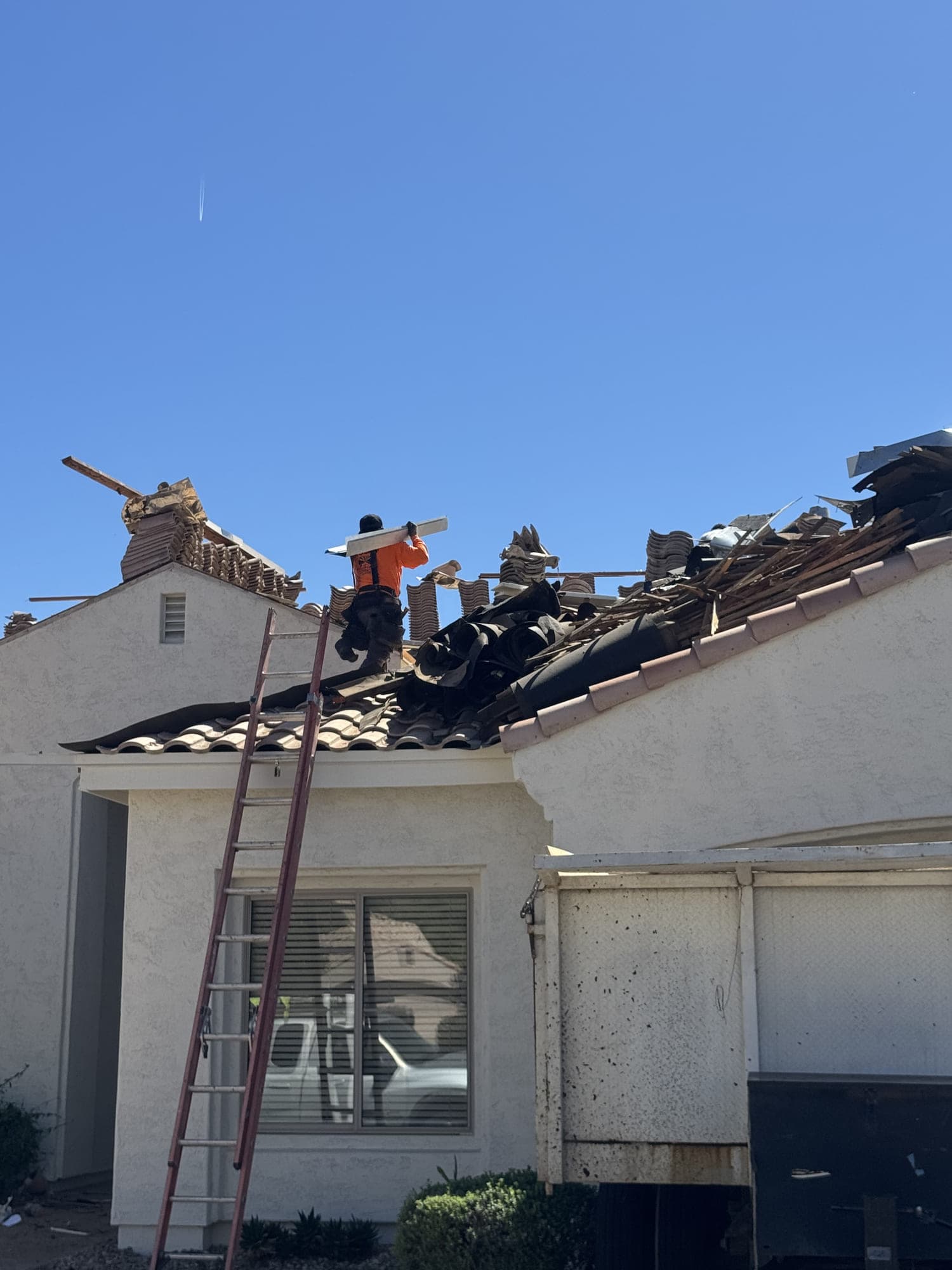
A tile roof part way through a tear-off seen from the driveway, old underlayment stripped back in rolls, tile and battens stacked along the ridge, and a ladder up to the eave.
The layer underneath
The part of your roof you have never seen
A tile roof can look immaculate from the street and be finished underneath. The tile is a sun shield; the underlayment beneath it is the waterproofing, and tile routinely outlives two or three of them.
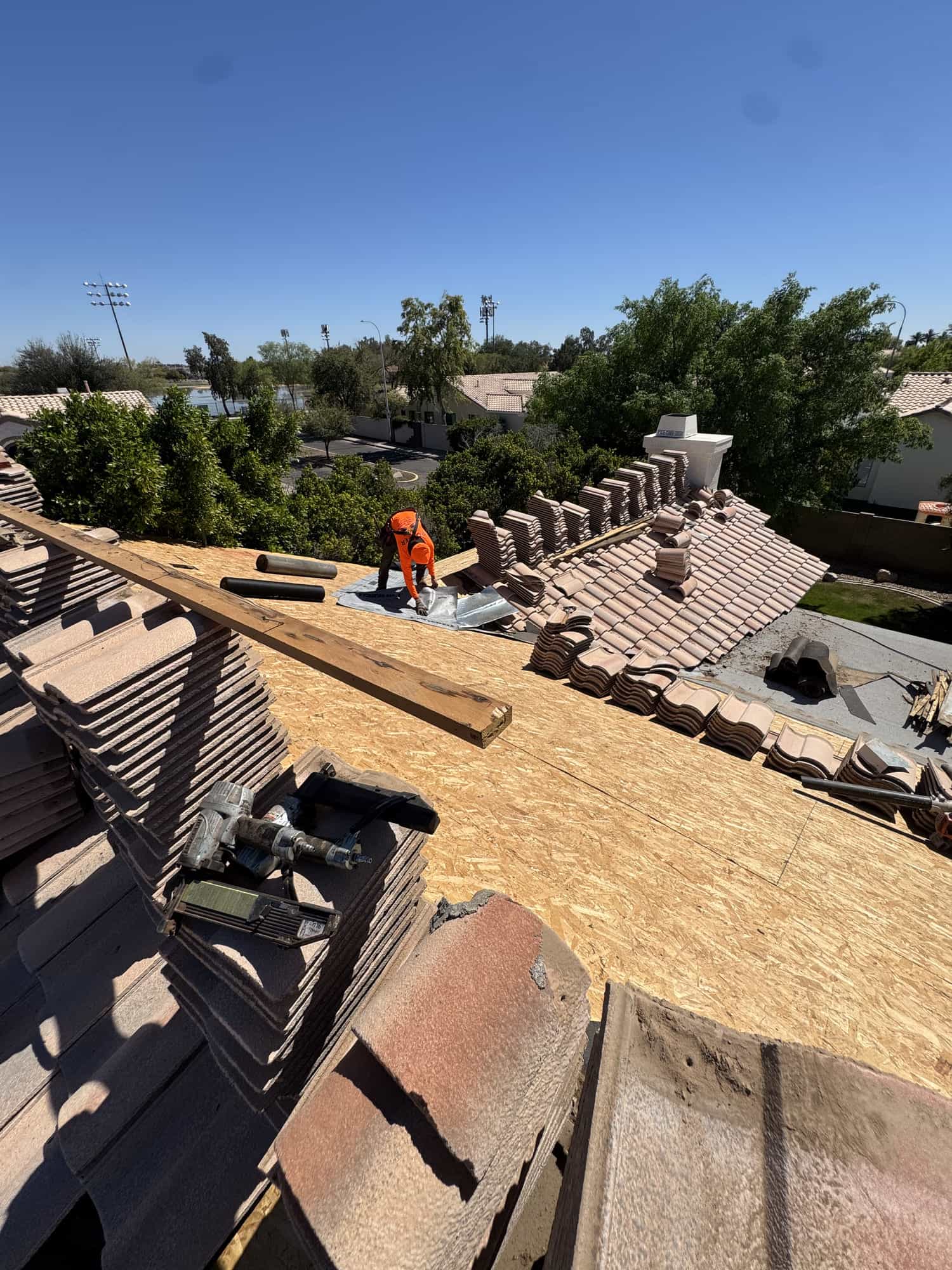
So this is what an underlayment job actually is. The tile is lifted and stacked in rows, the deck is exposed and any damaged sheets are cut out and replaced, and then the same tile goes back down.
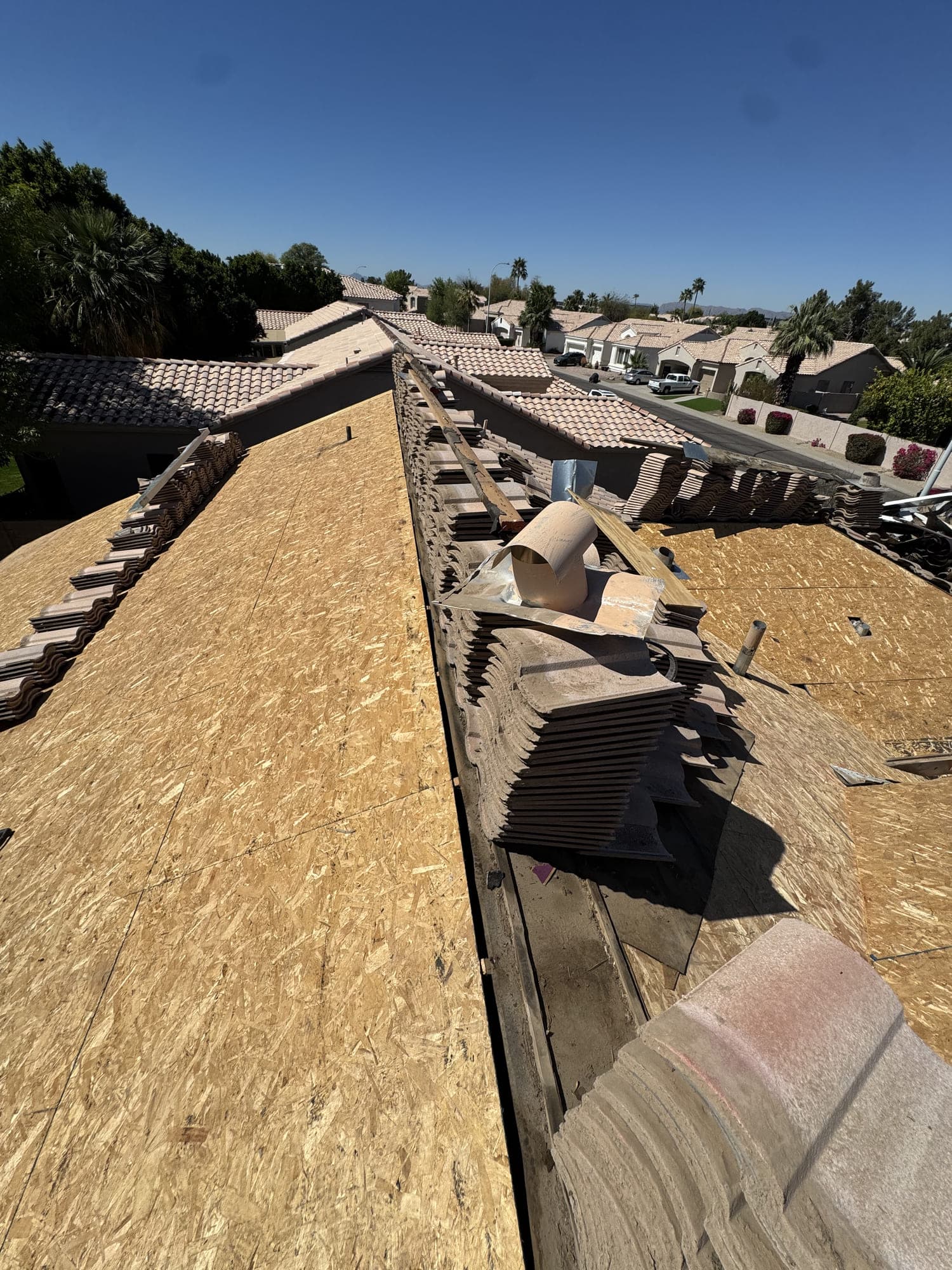
Looking along the ridge of a tile roof during an underlayment replacement — one slope stripped to new decking, the other still carrying stacked tile, above a street of tile-roofed Phoenix homes. 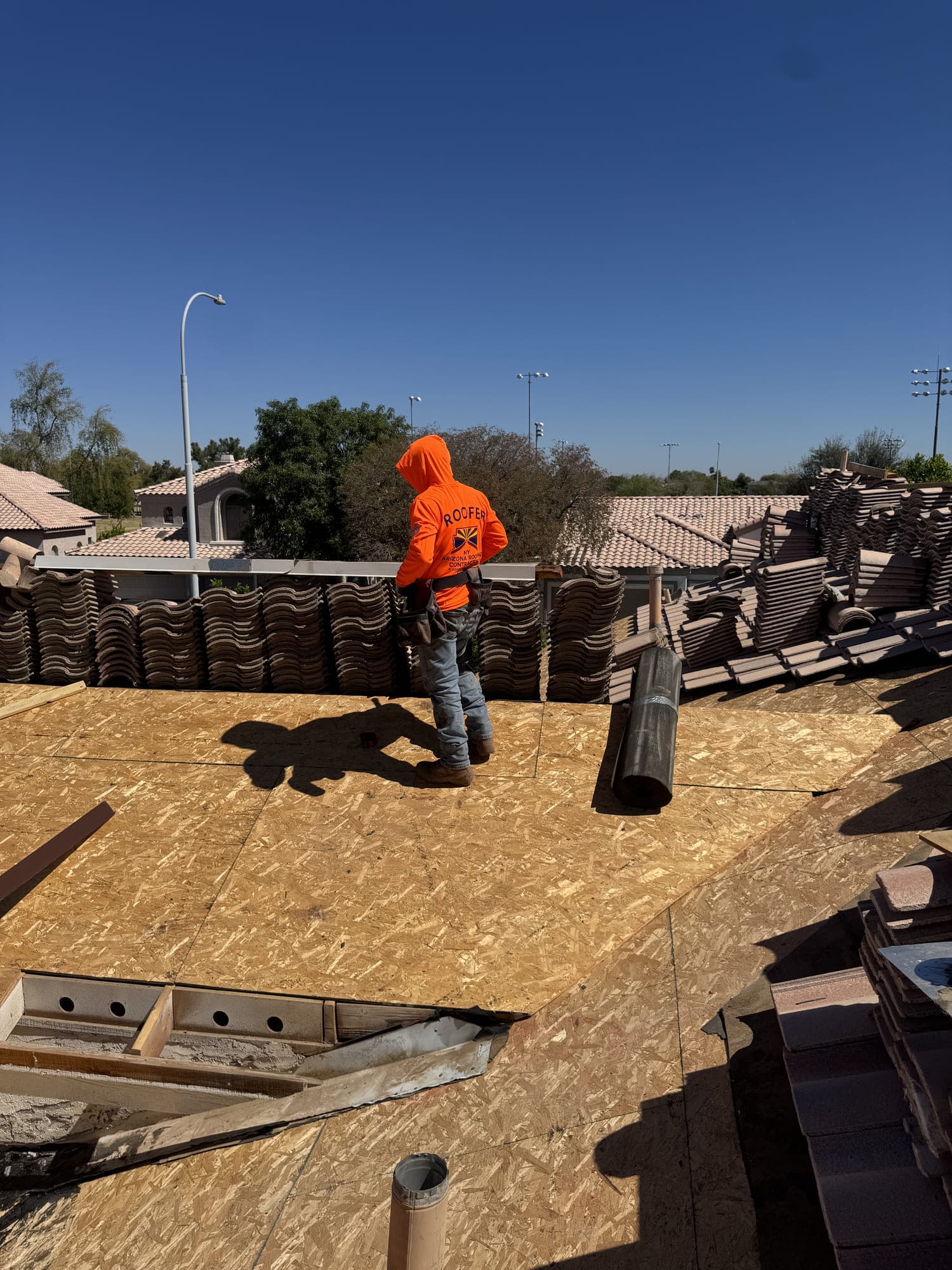
A roofer standing on newly laid decking beside long rows of concrete tile lifted from the roof, with damaged decking cut away and open rafters in the foreground. 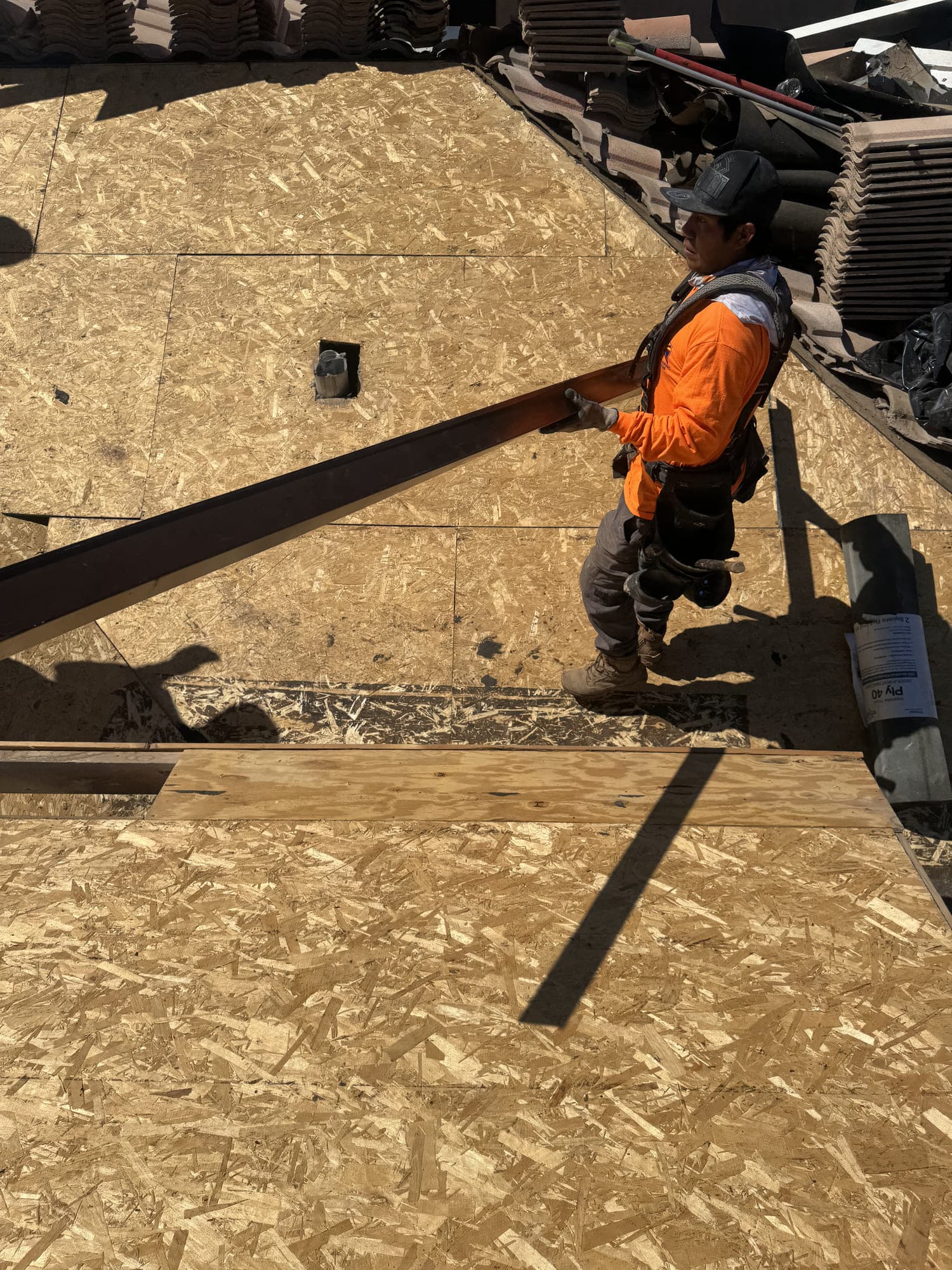
A roofer carrying a length of timber across newly laid roof decking, with rolls of underlayment and stacks of lifted concrete tile waiting at the ridge behind him.
Where the roof changes shape
Pitched tile meeting a flat section, on one house
Valley homes are full of these junctions — a tile slope running down to a low-slope roof over a patio, a garage or an addition. Water off a whole pitched slope arrives concentrated at a roof that drains slowly.
It is one of the hardest-working details on the building and it is invisible from the driveway. When a tile home leaks and the tile turns out to be blameless, this is a frequent reason.
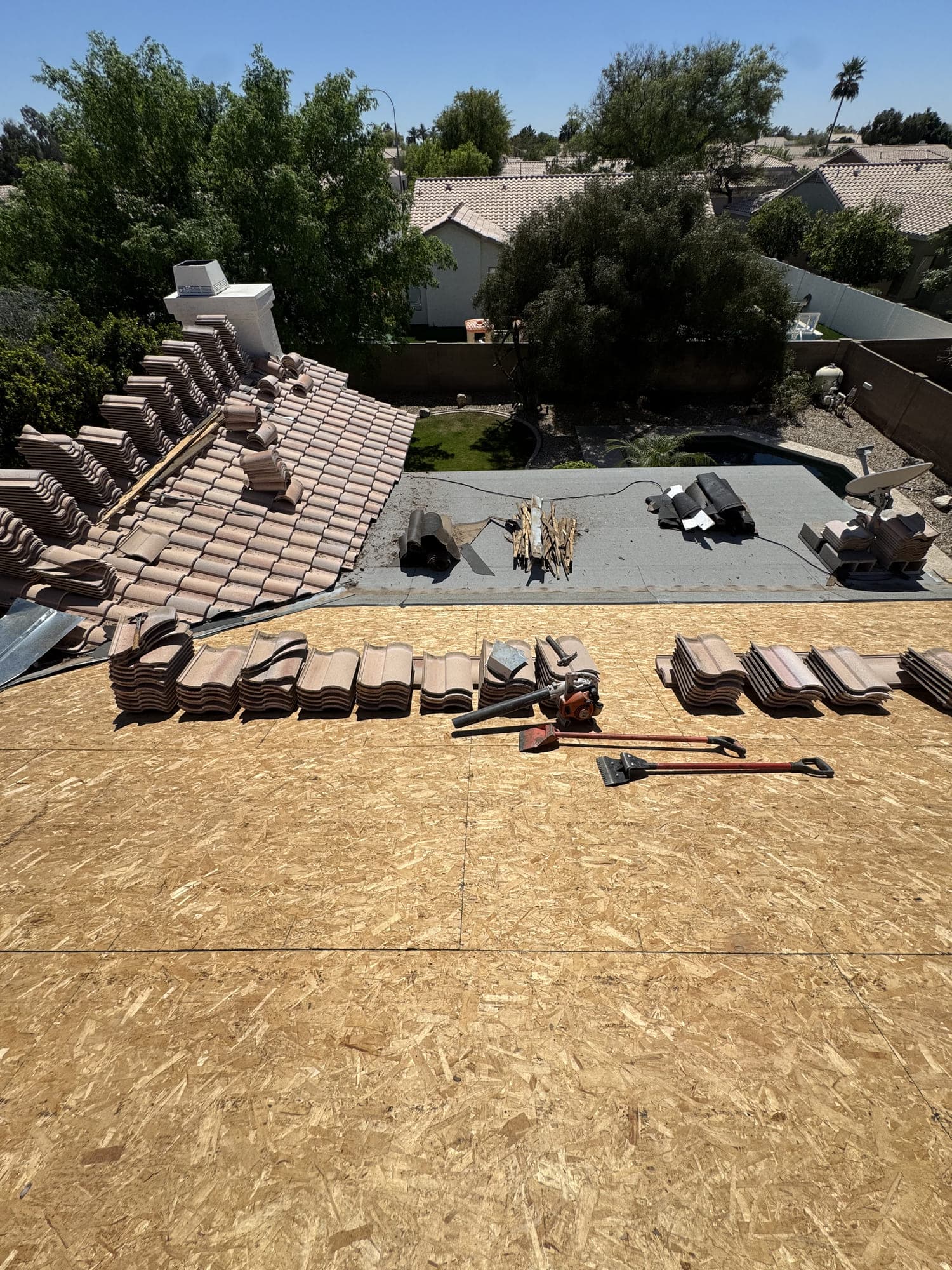
A pitched tile slope meeting a low-slope section on the same house — the flat area coated, the tile side stripped to new decking, with lifted tile and tear-off tools laid across it. 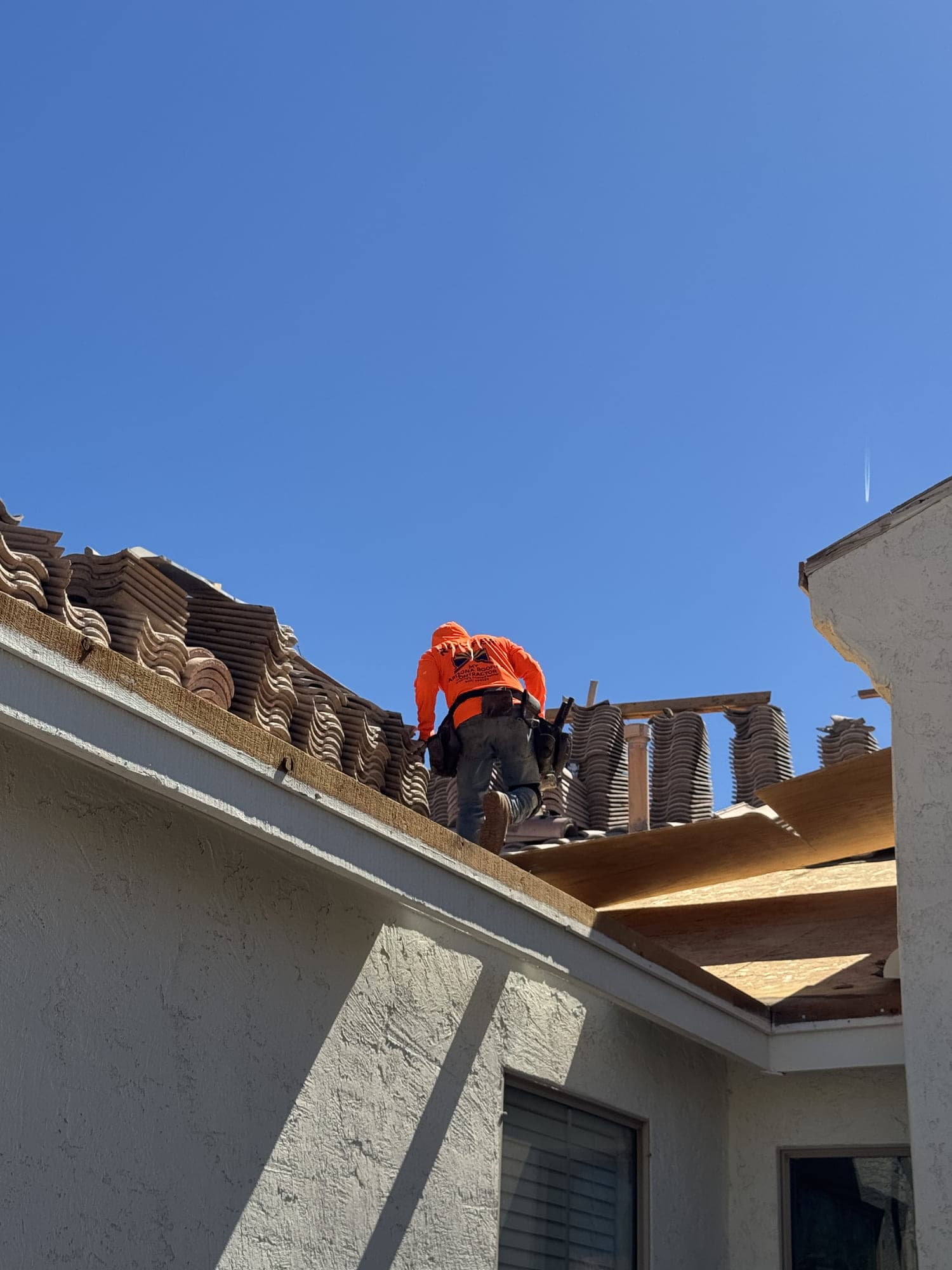
A roofer working along a course of concrete tile near the ridge, with lifted tile stacked in rows behind him and new decking exposed on the low-slope section alongside.
See your own roof
You get photographs like these of your own roof
The inspection is a walk of the whole roof, wide frames of every slope and close-ups of anything that matters. Free, no obligation, and the file is yours to keep.